Lived experience shapes mental health nursing in Fife
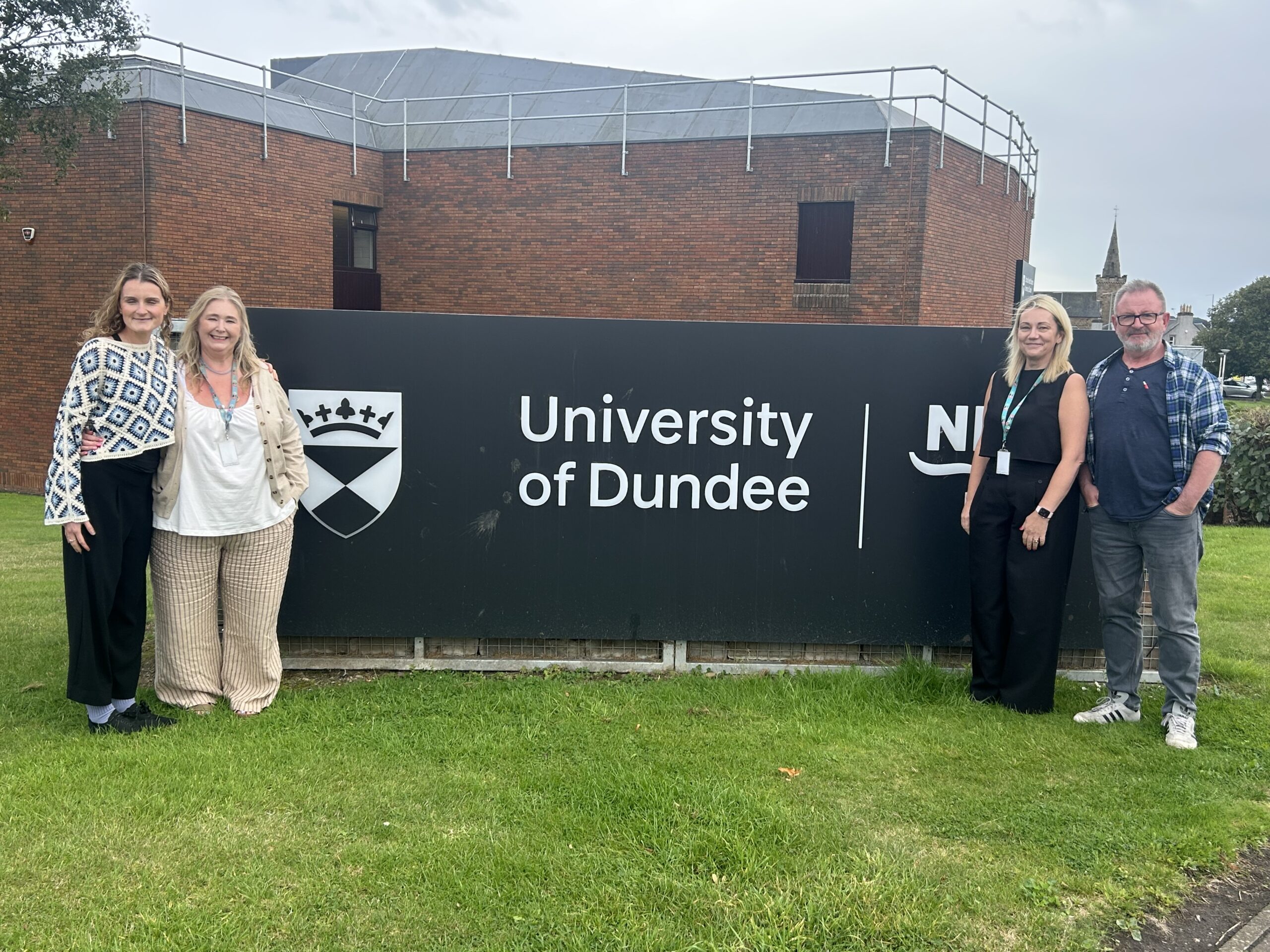
Change Mental Health is working with the University of Dundee to give mental health nursing students at its Kirkcaldy campus the chance to learn from people with lived experience of mental illness.
The partnership is now an established part of the mental health nursing programme at the University of Dundee. It brings together lecturers Emily-May Barlow and Paul Smith with Lynne Penman and Lee Hutton from Change Mental Health’s Hearing Voices service.
Hearing Voices has been part of the Fife community for over 30 years. It offers peer support groups and one-to-one outreach for people living with conditions such as schizophrenia, bipolar and psychosis. Peer support has been at the centre of the service from the start, helping people self-manage their mental health, find community and move through a system that can be hard to navigate.
Lynne Penman, Team Lead for Fife at Change Mental Health, said:
“This partnership grew from a conversation into something both organisations genuinely value. We want students to understand that mental health nursing is something we do with people.
“The Hearing Voices service has always been built on lived experience. Bringing that into the university feels like a natural part of what we do.”
Students meet Change Mental Health in their first mental health nursing module and the timing is deliberate. Before they study diagnoses, treatments and legislation, they meet the people they may one day support.
Lynne and Lee deliver the sessions together. Lee talks about her own experience of living with severe and enduring mental illness: what helps, what does not and what recovery has meant to her and her family. Lynne explains the support available beyond statutory services and the part the third sector plays in people’s recovery.
Emily-May Barlow, Mental Health Nursing Lecturer at the University of Dundee, said:
“Over the past two years, Change Mental Health has brought insight into the lived experience of psychosis that we can never provide as an educator alone. By designing and delivering nursing education alongside people with lived experience, we begin to level the playing field and model the collaborative, person-centred relationships we want our students to develop in practice.”
Students say the sessions have shown them the day-to-day realities of living with mental illness in a way that placements alone had not. They also describe greater empathy and a recognition that people can lead meaningful lives alongside mental health challenges.
Ted Stahle-McNaboe, a third-year mental health nursing student at the University of Dundee, said:
“Hearing directly from people with lived experience of mental illness has been one of the most valuable aspects of my mental health nursing education. It has helped me to understand mental illness as something experienced by a person, rather than simply as a diagnosis, collection of symptoms or a set of clinical observations.
“The person must always come before the diagnosis. Their experiences are not simply something to be learned about, they are an essential source of knowledge for those of us learning to provide mental health care.”
other news