It all counts: Steps that can change people’s finances
Money worries and poor mental health often go together while support goes unclaimed in Scotland. Our advisers explain how they help, from the first call onwards.
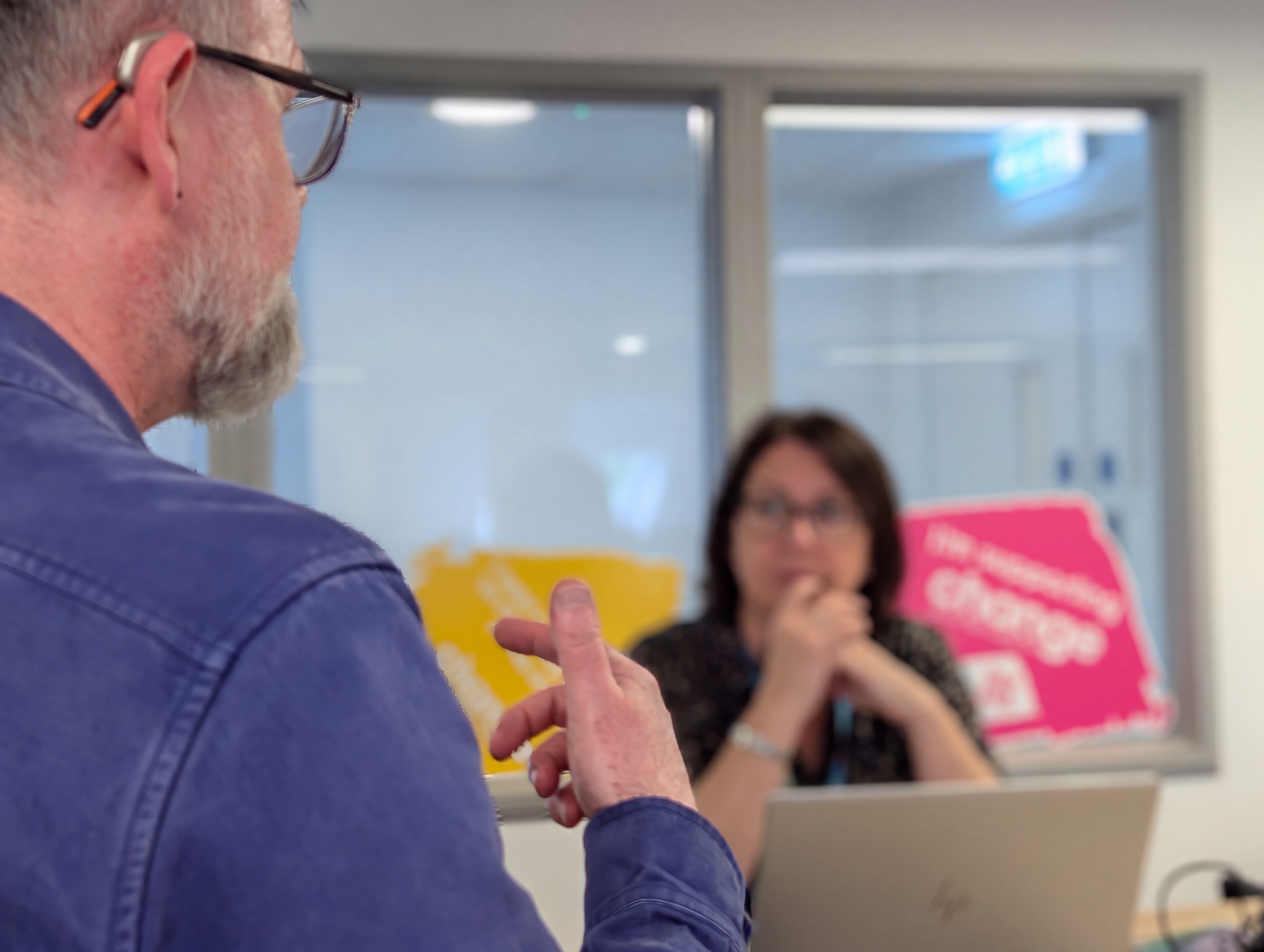
Many of the people who contact our National Advice and Support Service are struggling with money and their mental health at the same time. Sometimes a 10-minute call is the first step. Other times it’s a benefit check, a fuel voucher or a budgeting tool.
In 2025/26, we secured £693,746 in financial gains for people across Scotland, an average of £4,540 for each person who received a financial gain. The highest one-off back payment was £17,477 of Adult Disability Payment. People’s mental wellbeing scores went up by an average of 2.34 points on the Short Warwick-Edinburgh Mental Wellbeing Scale (SWEMWBS) and 75% said they don’t need to access support from Community Psychiatric Teams and A&E.
Money worries and mental health in Scotland
Almost a third (32%) of households in Scotland have no savings and almost half of people in Scotland don’t feel secure in their current financial position. More than a third (36%) of Scottish households feel they have no control over their financial situation and 37% say their situation is causing their mental health to deteriorate.
We don’t know how much benefit goes truly unclaimed in Scotland. The Scottish Government and Social Security Scotland publish take-up rates for the benefits it delivers, but not for Adult Disability Payment or Carer Support Payment.
That is starting to change. This year, the government published a new benchmark for Adult Disability Payment. It suggests people receiving it make up around 70% of those who may be eligible, though the government stresses this is not a take-up rate. Social Security Scotland is also developing ways to measure take-up of carer benefits.
Take-up still varies a lot between benefits. It has risen to 96% for Scottish Child Payment, up from 89% two years ago, but only 60% of eligible people get Funeral Support Payment and 16% of eligible young people get Job Start Payment.
Public spending on benefits and financial help is hotly debated. But what is missing from the conversation is just how much support is left unclaimed.
Benefit checks and unclaimed benefits in Scotland
Neil, an Advice and Support Officer, told us the first conversation starts with simple questions: “Is it still convenient to take the call? Are you comfortable that the call is recorded? What is your preferred name?” The aim is to try and create a safe and welcoming space for them.
It’s also important to allow “time and space for client questions, so that they feel that they are active participants in the conversation.”
Jane, an Advice and Support Officer, notes that “a surprisingly high number of people assume that if they are in work, then they are not entitled to any benefits.” In her words, benefit checks are “regularly identifying entitlements which make a huge positive difference to so many and promote increased financial confidence in an uncertain landscape.”
Anne cared for her husband for six years. When he died in late 2024, her Carer’s Allowance stopped straight away. Within weeks, she applied for Adult Disability Payment on her own and was turned down: “These were done literally weeks following his passing and with no assistance.”
Neil helped her ask for the decision to be looked at again and apply for a crisis loan. Anne told us:
“Without Neil, I didn’t even know these existed.”
Thomas lives in a rural Highland town. One of our Advice and Support Officers helped him get psychiatric evidence of complex trauma, and apply for Adult Disability Payment and priority housing. After he was awarded priority housing points, Thomas told us:
“It’s the first real change I’ve seen in 35 years of struggling.”
Older people are missing out too. Independent Age estimates that £346 million goes unpaid to older people in Scotland every year. This includes £143 million of Pension Credit, £139 million of Housing Benefit and £64 million of Council Tax Reduction. Its research also found that 24% of older people with a health condition are not aware of the disability social security payments that are available.
Help with energy bills: fuel vouchers and Crisis Grants
Emilia, a Welfare Rights Adviser, told us: “A fuel voucher or Crisis Grant can make a real difference if you’re struggling with heating, electricity or food costs.” A fuel voucher tops up a prepayment meter, while a Crisis Grant can also help with food. Fuel vouchers and Crisis Grants are part of the £693,746 in financial gains we secured for people last year.
Emilia added: “Both types of support are limited and intended as short-term help, so it’s worth having a full benefit check to make sure you’re getting everything you’re entitled to and that your income is fully maximised. There may also be additional support available from your energy supplier, local council or other schemes.”
Nora, aged 77, came to us with anxiety and energy bills she couldn’t manage. A benefit check made sure she was getting the correct benefits. We then secured £900 for her energy debts and £200 for essential clothing.
How a budgeting tool can help you manage money
Abbie, an Advice and Support Officer, uses an income and expenditure document with the people we support. In her experience, “it allows individuals to view all their current income and expenses laid out, so they know exactly where their money is going. They might realise that something is more expensive than they previously thought, like an energy bill, which could lead them to look elsewhere at cheaper options, where they might switch energy providers and save money.”
As Abbie put it: “It allows them to take control over their own money and have an increased sense of their own financial awareness and management.”
How to talk about money worries
Neil told us:
“An adviser must acknowledge that the subject matter of personal finances is sensitive. It is unlikely that a client will disclose everything during the first conversation, but creating a space where the client, at the very least, understands why they are being asked for particular pieces of information, ought to help to start developing trust. Remembering that the client is bringing their own ‘history’ to the conversation, past negative experiences of engaging with services may be an ‘invisible’ barrier that the adviser might need to overcome.”
If you’re worried about money, please get in touch to discuss your options and see what other support may be available.
support
Our National Advice and Support Service can help you and people you care for with mental health concerns and money worries, including benefits, grants and debt.
The service is open Monday to Friday, 10am to 4pm (closed for lunch between 12.30pm and 1.30pm). Call 0808 8010 515, email advice@changemh.org or fill in the form on the service webpage.
Other support
- Scottish Welfare Fund: Crisis Grants and Community Care Grants from your local council.
- Social Security Scotland: Scottish benefits, including Adult Disability Payment and Carer Support Payment.
- Breathing Space: call 0800 83 85 87 if you’re feeling low, depressed or anxious.
- Samaritans: call 116 123, 24 hours a day.