eating well for your mental health
You’ve probably heard the old saying, ‘you are what you eat’. And guess what? There’s more truth to it than you might think! While we often hear about the impact of diet on physical health – like how being overweight can lead to serious conditions, like heart disease and cancer – what’s less talked about is how what you eat affects your mental health.
Reports show that eating foods high in saturated fat, refined carbohydrates and processed goodies can negatively affect our mood, especially for children and teenagers.
In Scotland, two out of three adults are classified as being overweight or obese. It’s more important than ever to understand the connection between what’s on our plates and in our minds. Next time you’re reaching for a snack, remember that you’re not just feeding your body, you’re feeding your mind as well.
common myths about nutrition and mental health
dietary supplements can replace a balanced diet
While certain supplements have benefits, relying solely on them can overlook the importance of a varied diet rich in whole foods. A balanced approach to nutrition is essential for supporting overall mental health.
low-fat diets are best for our health
Fat is often seen as a ‘bad’ thing. However, dietary fat – found in nuts, seed and fish – is crucial for brain health and mental function. Restricting fat intake too much may deprive the brain of essential nutrients, negatively impacting mood and brain function.
skipping meals improves mental focus and productivity
Skipping meals can cause blood sugar levels to plummet, decreasing brain function and could lead to eating disorders. Balanced meals provide the brain with the energy and nutrients needed for good mental performance, while skipping meals can upset your metabolism and potentially lead to burnout.
how does nutrition and diet affect my mental health?
Your diet has a big impact on how you feel, both mentally and about your body. Eating the right foods can make you feel happier and more confident, while unhealthy eating habits can affect your mood and how you see yourself.
Nutrient quality
Eating plenty of fruits, vegetables, whole grains, lean proteins and healthy fats is good for your brain and your mood. These foods give your brain the fuel it needs to work well and help you feel more positive.
Gut-brain connection
There’s a link between your gut and your brain. Eating foods that are good for your gut, like yoghurt and fibre-rich foods, can help you feel better mentally.
Blood sugar control
When your blood sugar levels go up and down because of eating too many sugary or processed foods, it can make you feel grumpy and tired. Eating balanced meals with whole foods helps keep your blood sugar steady, which is better for your mood and energy levels.
Inflammatory foods
Some foods, like sugary treats and processed snacks, can cause inflammation in your body. This inflammation might make mental health conditions like depression and anxiety feel worse. Eating anti-inflammatory foods like fish, nuts and colourful fruits and veggies can help you feel better.
Caffeine
Cups of tea and coffee or energy drinks can help you feel more alert and focused during the day. However, too much can make you feel irritable, anxious or prevent you from sleeping well. Try to limit drinking caffeinated beverages at least six hours before going to sleep.
Alcohol
Drinking alcohol affects the balance of chemicals in your brain. While it may boost your mood temporarily, when the effects often wear off, it can lead to low or negative feelings. It can also disrupt hunger cues, increasing or decreasing your appetite, which can affect your energy levels.
what makes a ‘balanced diet’ and good nutrition?
A balanced diet means eating a mix of different foods that give your body all the nutrients it needs to stay healthy. It’s important to know that a balanced diet for you will look completely different from somebody else’s.
Regardless, having a balanced diet not only helps your body work well but also affects how you feel mentally and about your body. Research says that eating your five a day of fruit and vegetables boosts feelings of optimism and confidence, while also reducing the likelihood of distress and depression.
In general, here’s what you need to know:
- Fruit and veg: The NHS suggest having five portions of fruits and vegetables every day. They’re full of vitamins, minerals and fibre that help keep your brain and body healthy. If you’re unsure where to begin, consider starting with blueberries. They’re known for their potential benefits for memory and mood regulation.
- Whole grains: Foods like brown rice, wholemeal bread and oats give you energy and keep you feeling full. They’re good for your digestion too.
- Lean proteins: Foods like chicken, fish, eggs, beans and lentils help your body build muscle and keep your brain chemicals balanced. This can help you feel more positive and focused. Studies show high-protein meals help keep you satiated, so you are less likely to reach for sugary snacks. Remember that protein does not necessarily mean just meat.
- Healthy fats: Your brain needs fats to work well, so don’t be afraid to enjoy foods like nuts, seeds, avocado, dark chocolate and oily fish. Lack of omega-3s in your diet has been linked to the development or worsening of various mental illnesses, such as bipolar and schizophrenia.
- Dairy or alternatives: Milk, cheese and yoghurt are packed with calcium and vitamin D, which are important for strong bones and teeth. If you’re not a fan of dairy or have an intolerance, try fortified plant-based alternatives like almond milk or soy milk.
- Food intolerances: Be conscious of any food intolerances that you may have. Some of the most common ones include gluten, dairy and nut allergies.
- Hydration: Try to drink around 6-8 cups of water a day. Even slight dehydration can affect your mood, energy and concentration.
A balanced diet isn’t about being perfect or cutting out all your favourite foods. Do not feel the need to always eat healthy or ‘pure’ foods, as you may develop a condition called orthorexia. It’s about enjoying a variety of foods in moderation and listening to your body. By eating well, you can feel happier, more confident and take better care of your mental health.
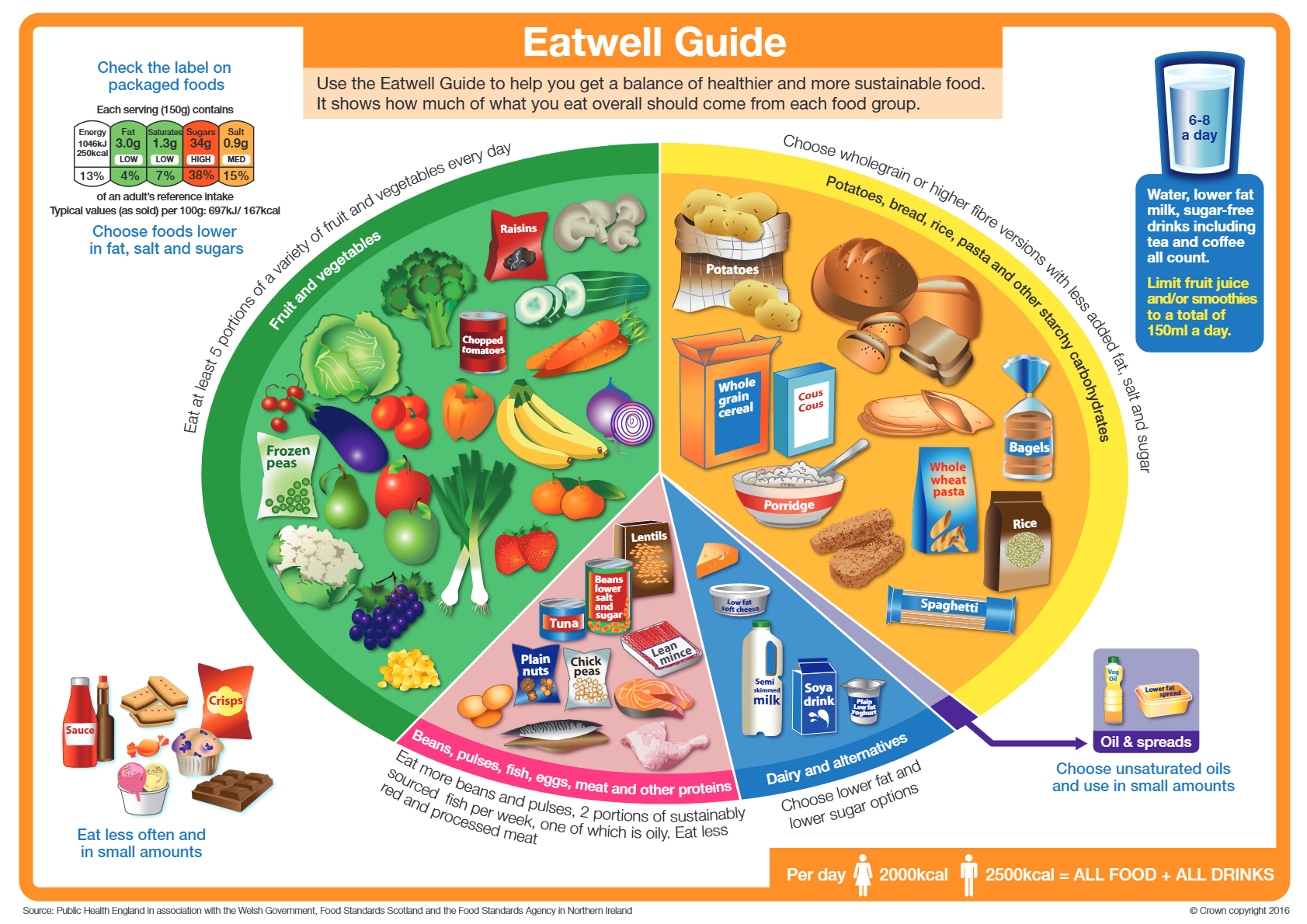
the eatwell guide
Making healthy meals shouldn’t feel like a chore, so be creative with trying out new foods and recipes! The Eatwell Guide can help you to plan meals that include food from each of these different groups to help you maintain a balanced diet:
You might also want to consider talking to a dietician and health specialist about what diet works best for you. You can reach out to your local GP to find out more.
support
Our National Advice and Support Service can help you and people you care for with mental health concerns and money worries.
We can link and signpost you to relevant local and national support, including our own Change Mental Health services, as well as supporting with debt, grants and benefits.
The service is open Monday to Friday, 10am to 4pm (closed for lunch between 12.30pm to 1.30pm). Contact 0808 8010 515, email advice@changemh.org or fill in the form on the service webpage.
For full details about the service, visit the National Advice and Support Service webpage.
