Ask once, get help fast: what happens when someone is referred to DBI
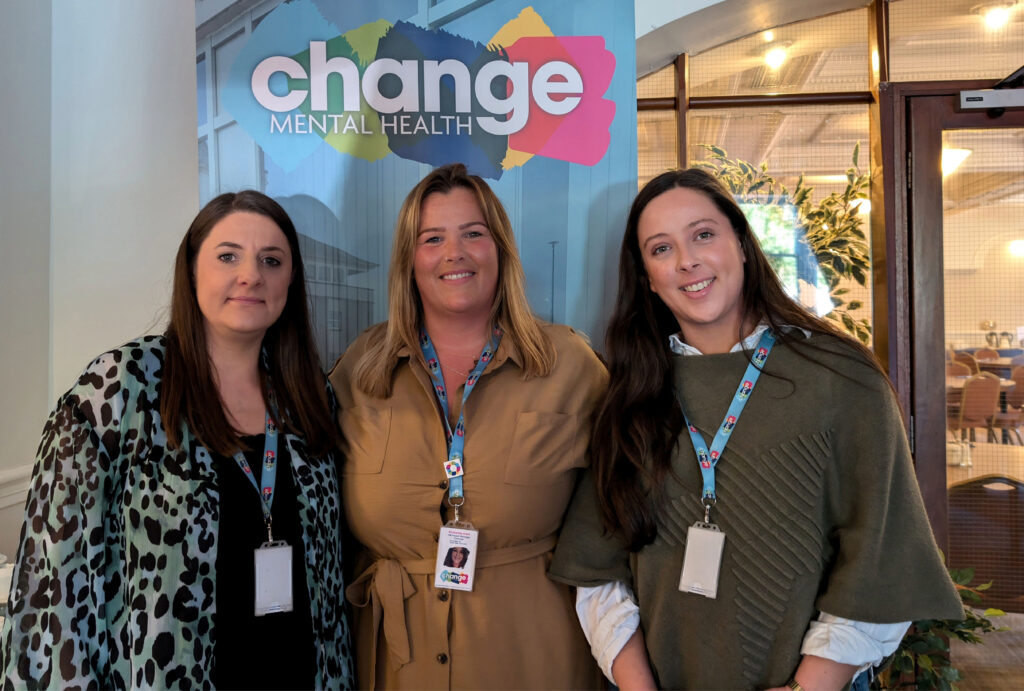
Shannon, a DBI coordinator, explains what a referral to DBI looks like and how it helps people move through distress.
Distress is a feeling of extreme worry, sadness or pain: a situation you’re finding hard to cope with and need urgent help. Every day, our Distress Brief Intervention (DBI) team hears from people about how distress is triggered and how it can be different for each person. It can be triggered by almost anything: a relationship breaking down, money worries, a bereavement, a health scare or the slow build of stress that finally tips over.
Distress Brief Intervention (DBI) exists for exactly that moment. It takes a non-clinical approach, working with what a person needs right now and to help them build on their strengths.
DBI runs 365 days a year across Scotland. Change Mental Health is the lead agency in Highland, Dumfries & Galloway, Argyll & Bute and the Western Isles. Different organisations and partners across the country lead on delivering DBI across other council areas.
Most DBI referrals start with a Level 1 practitioner: a GP, A&E staff, Police Scotland, the Scottish Ambulance Service, NHS24 or, on the Western Isles, the Fire Service. Their job is to offer a clear, connected and compassionate first response to people in distress.
From there, a referral can go to Level 2, DBI Coordinators, for up to 14 days of short-term, emotional and practical support. DBI is not a crisis service, however, it is designed for support in the days and weeks after difficult moments and circumstances.
“I believe that the support offered by DBI can complement the support from primary care mental health nursing services. The process of referring to DBI is quick, easy and it really helps to provide more seamless support, with DBI being able to contact the person within 24 hours.”
– a Primary Care Mental Health Nurse.
the first 24 hours
Our team of DBI Coordinators aim to make contact within 24 hours of a referral landing into the NHS mailbox. After that, an appointment will be arranged, whether over the phone, via a video call through NHS Near Me, or face-to-face for people based in Inverness. For many clients, that pace is the first surprise.
Making quick contact is often the first indication that embeds trust, reassuring people that they are being taken seriously and that their wellbeing is genuinely being looked after. Hearing a warm, compassionate voice that calmly explains what’s available and responding with understanding is often enough on its own to establish that first connection.
“As we are within 24 hours, they can feel that their distress is being handled swiftly and with care and consideration. I think, given the waiting times for other services, ours is unique in that we make that contact and send resources after the first call. This can be massive for people when they are at their lowest.”
– Amy Hasson, Distress Brief Intervention Service Lead.
What can change in 14 days of DBI support?
Support spans over a fortnight, with an average of 3 appointments. It is enough time to shift how someone sees their situation and themselves. People learn life-coping skills and ways to manage their anxieties. They learn about boundaries and clear communication, and have their feelings listened to and normalised. Realistically, their whole outlook on life can change. More than one of us has said the same thing in different words: none of us has worked in a mental health team before where we’ve had so much positive feedback from the people we support.
People can fall back in love with themselves. At the very least, they start to build a more caring and compassionate view of who they are, strong enough to trust other services they might never have engaged with before. Improved understanding of their own triggers, a stronger sense of identity and a greater ability to tolerate distress without being overwhelmed are the changes we most often see by the end of those two weeks.
“You have helped me so much that I don’t think you know just how much of a new lease of life you have given me. I will never forget you and I’ve taken your advice by making a start on re-enrolment with university.”
– Feedback from a client who engaged with DBI.
what do people get wrong about distress?
For us, the biggest barrier is often the word ‘distress’ itself. Clients downplay whatever is causing it, insisting that others have it worse than they do and that they’re taking up a valuable space someone else could use. It’s almost like they feel undeserving of support, when the truth is everyone is deserving of it. Others put it more bluntly still: “I’m not distressed, I have stress or anxiety caused by XYZ”, as though distress is too strong a word for what they’re actually going through.
My colleague Kimberley Irwin, Distress Brief Intervention National Programme Lead, describes this very accurately:
“People will tend to sit in the emotion and behaviours rather than focus on the why. Therefore, it is difficult to understand the term ‘distress’. They believe that what they are going through is not relevant or doesn’t have an impact. It’s not until working with DBI that situations, feelings and behaviours can be put into perspective, which is why it’s so valuable for understanding distress.”
Some are surprised by the suggestion of practical tools rather than counselling. They expect it to be more counselling and more listening, which it isn’t. Others whose acute distress has already eased by the time support begins may feel they no longer need or deserve the service, when, in fact, it’s a good time to build tools for whatever comes next.
A lot of the work is simply having a safe place to talk with a neutral person who validates what someone has been through. We’re not family or friends, but we are saying something to make them feel better. It comes from professionals, so it’s received differently.
the numbers behind the support
Between June 2024 and May 2025, the team received 24,103 referrals across Scotland. Of the cases that reached an appropriate conclusion, 86% of people remained engaged with support throughout and 80% went on to seek further support beyond that first intervention.
Stress and anxiety remain the most common reason people are referred (69%), followed by low mood (65%) and suicidal thoughts (39%). The most frequently cited contributory factor is emotional wellbeing (51%), followed by ongoing coping difficulties (49%) and relationship breakdown (38%). Referrals span every age group, though most cluster between 26 and 45.
“I was recently referred to you due to a mental breakdown. I had the pleasure of receiving help and advice from a member of your team. I would just like to say that they listened to everything I had to say and gave me valuable advice and information to help me through this dark time that I’m currently in. Thank you so much for all the help given; it’s very much appreciated.” – A person supported by DBI.
support
If you’re a frontline worker and want to know more about referring someone into DBI, find out more on the Distress Brief Intervention website, or contact the Change Mental Health DBI team on 01463 490859.
If you or someone you care for is struggling right now, our National Advice and Support Service can help you find the right support, including signposting to DBI where it’s available.
The service is open Monday to Friday, 10am to 4pm (closed for lunch between 12.30pm to 1.30pm). Contact 0808 8010 515, email advice@changemh.orgor fill in the form on the service webpage.