
Gayle’s story: Trauma, loss and rebuilding resilience
Caring, trauma and bereavement left Gayle in crisis. This story shows how support from the Resilience service helped her rebuild stability, confidence and safety.
For most of my adult life, I was a carer. I’d lived with trauma for years and had learned how to keep going. Everything changed after my mum died.
All the symptoms came back: anxiety, depression, the lot. Losing my mum after so many years of caring responsibilities completely floored me. It had been my mum and me for a very long time.
Before I became a carer, my life was heading in a very different direction. I was training in psychology and had done some training in Cognitive Behavioural Therapy (CBT), back when it was still new. But, as my caring responsibilities increased, everything changed. I left my training to become a carer and never went back. Over time, I just got lost.
After my mum’s death, nothing helped. I got tired of the way I felt. I didn’t want to be here anymore. I’d had enough of plodding on with nothing changing. I didn’t think I was any use to anybody – not even my daughter or my granddaughter.
I was carrying bereavement, trauma, financial strain and the sudden end of the caring role my life had been built around.
My world became very small. I shut myself off from people and didn’t want anyone around me. I coped by comfort eating and gained three stone in under a year. I didn’t want to be here. That’s when suicidal thoughts started.
reaching a crisis and seeking support
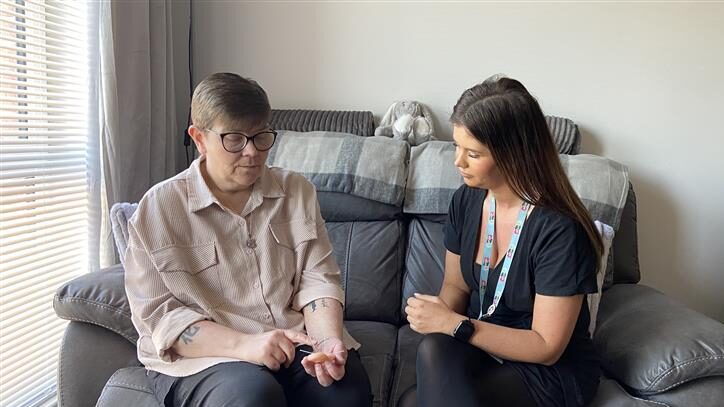
Eventually, I went to my GP. I wasn’t expecting much. I was referred to counselling, but it wasn’t really much help. I was also given a list of phone numbers. One of them was Change Mental Health in Tayside. That was how I met Isla, an Outreach Worker from the Resilience service.
At that point, I was exhausted and disconnected. Isla later told me that when my referral came in, her line manager questioned whether it was appropriate because I was so very low.
What mattered to me was that Isla didn’t try and force opinions or illnesses on me. She was interested in hearing me. That felt different straight away. By the following week, I was actually looking forward to seeing her again.
There was no rigid plan and no pressure. Isla focused on the tools and knowledge I already had. She managed just to get through all my irrational thoughts without me even realising. It was like listening to rational me.
trauma recovery tools and rebuilding stability
With some support in place, I slowly started using things that helped me feel steadier. Some were tools I already knew, but I hadn’t been able to use them on myself while I was caring and grieving.
One of the first steps was simply getting out of the house again. We started small: short walks and a coffee. Each time, I felt a bit more like myself. One thing I’d wanted to do for years was walk barefoot on the beach.
Then, I did it and sent Isla a photo.
Gayle
I also started counselling at Mindspace, which helped me understand trauma I’d been carrying for a long time.
For years, flashbacks had controlled where I could go and what I could do. Certain places felt impossible. Eventually, I reached a point where I’d had enough. I started going back to places I’d avoided, standing there and staying until the fear passed.
I began using grounding techniques and meditation more consistently. Slowing my breathing and bringing myself back into the present made a difference when anxiety rose.
With Isla’s support, I set boundaries and stuck to them. It changed how I saw myself. I began to understand that I was worth putting the effort in for.
Isla encouraged me to reconnect with people again and suggested a somatic, trauma-informed group programme. The idea frightened me. I don’t do groups.
The first acupuncture session was intense and released a lot of anger. But I stayed and went back the following week. Gradually, I started speaking in the group. I realised it wasn’t just me. By the end of the programme, I let another person hug me. That was huge for me.
I’ve rediscovered my enjoyment of learning and started training to become an acupuncture practitioner myself. Isla said that I’ve been the most hard-working, understanding and self-reflective person she has supported.
living with trauma now
While working with Isla, I’ve reached the point where I realised that either I had to die or be proactive in my own health.
I was having suicidal thoughts and was planning suicide many times. I had started stockpiling medication at home. I told Isla about it and with her support it was removed safely.
Now, I approach my days differently. I wake up and ask myself what I want to do today, not what I have to do. I know there may still be low days. I’m realistic about that, but I recognise the signs now and I know what helps.
Happiness looks different to me now: being able to get out of bed, having food in the fridge, going to the shop, and seeing my daughter and my granddaughter. That’s happiness.
Honestly, even if this is as good as it gets, I’m quite content with that. I’m not striving for greatness. I’ll just see where life takes me.
support
Our National Advice and Support Service can help you and people you care for with mental health concerns and money worries.
We can link and signpost you to relevant local and national support, including our own Change Mental Health services, as well supporting with debt, grants and benefits.
The service is open Monday to Friday, 10am to 4pm (closed for lunch between 12.30pm to 1.30pm). Contact 0808 8010 515, email advice@changemh.org or fill in the form on the service webpage.
For full details about the service, visit the National Advice and Support Service webpage.
